Radar in the Living Room: MIT Researchers Take Fall Risk Assessment Out of the Lab
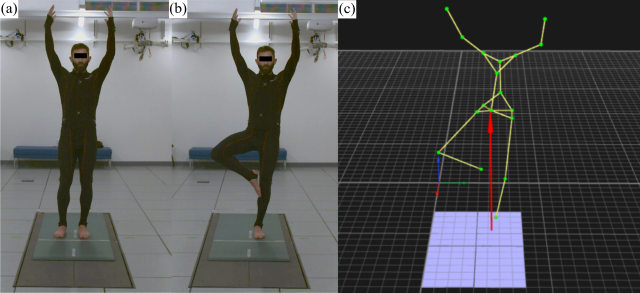
Researchers from MIT's Center for Clinical and Translational Research (CCTR) and Institute for Medical Engineering and Science (IMES) have published three companion works advancing the use of non-contact radar technology for fall risk assessment in older adults. The research centers on the One-Legged Stand Test (OLST) — a clinically validated balance assessment in which shorter hold times are linked to elevated fall risk and increased mortality — and explores whether a 24 GHz frequency-modulated continuous wave (FMCW) radar sensor can capture the same biomechanical information as traditional laboratory equipment, without requiring wearables or physical contact. In a study published in Gait & Posture, the team demonstrated that radar-derived signals can detect and characterize OLST performance in both younger and older healthy adults, validated against gold-standard motion capture and force plate measurements. To support reproducibility and accelerate the field, the researchers simultaneously released a fully open, synchronized multimodal dataset — described in a data descriptor published in Nature Scientific Data and publicly hosted on PhysioNet — comprising over 1,200 labeled OLST attempts from 32 participants across two age cohorts, complete with motion capture trajectories, ground reaction force recordings, and processed radar data. Together, these publications represent a significant step toward enabling unobtrusive, in-home fall risk monitoring for aging populations. Publishing 1 Publishing 2 Publishing 3